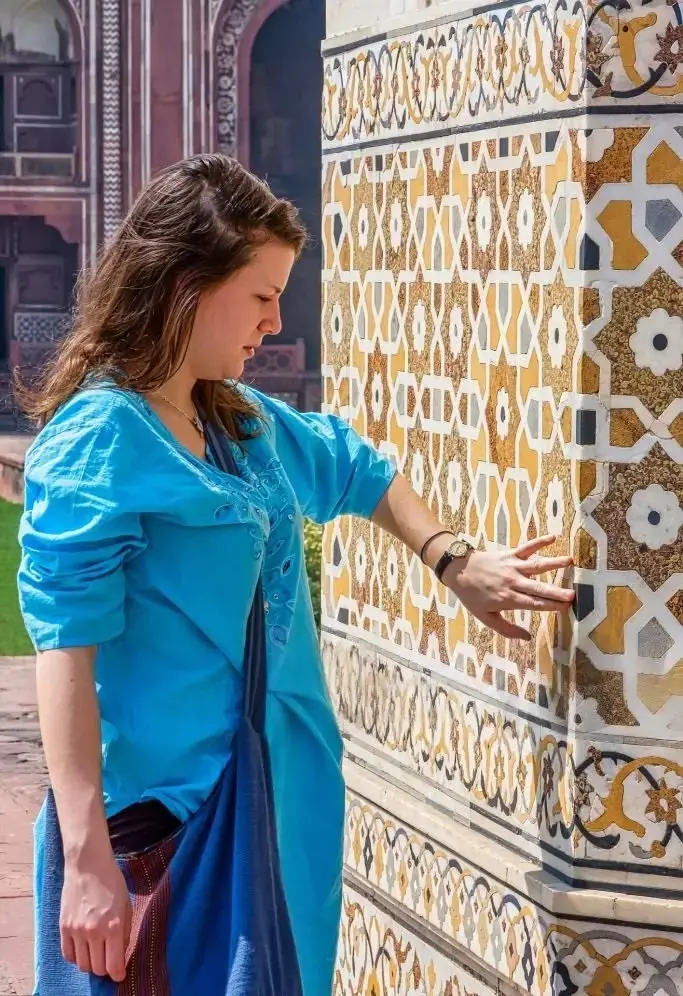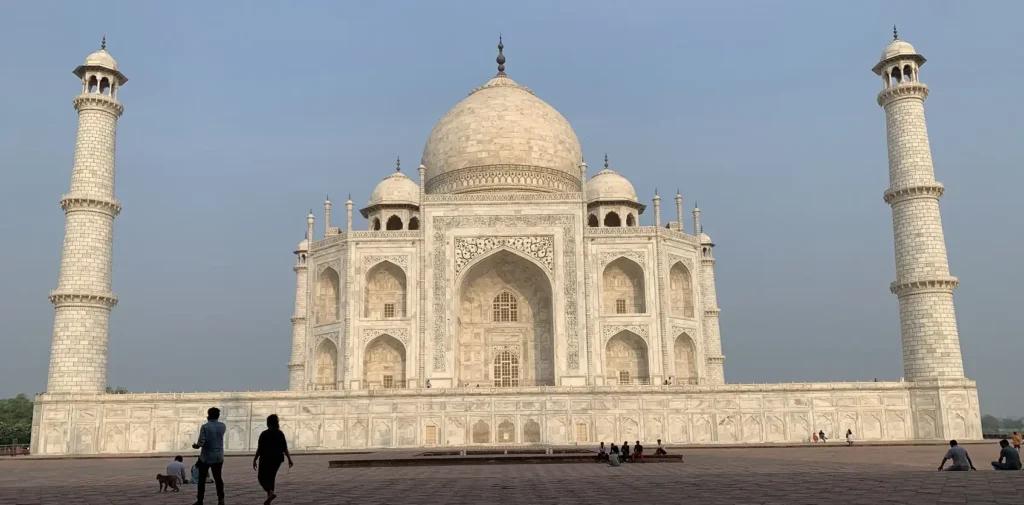
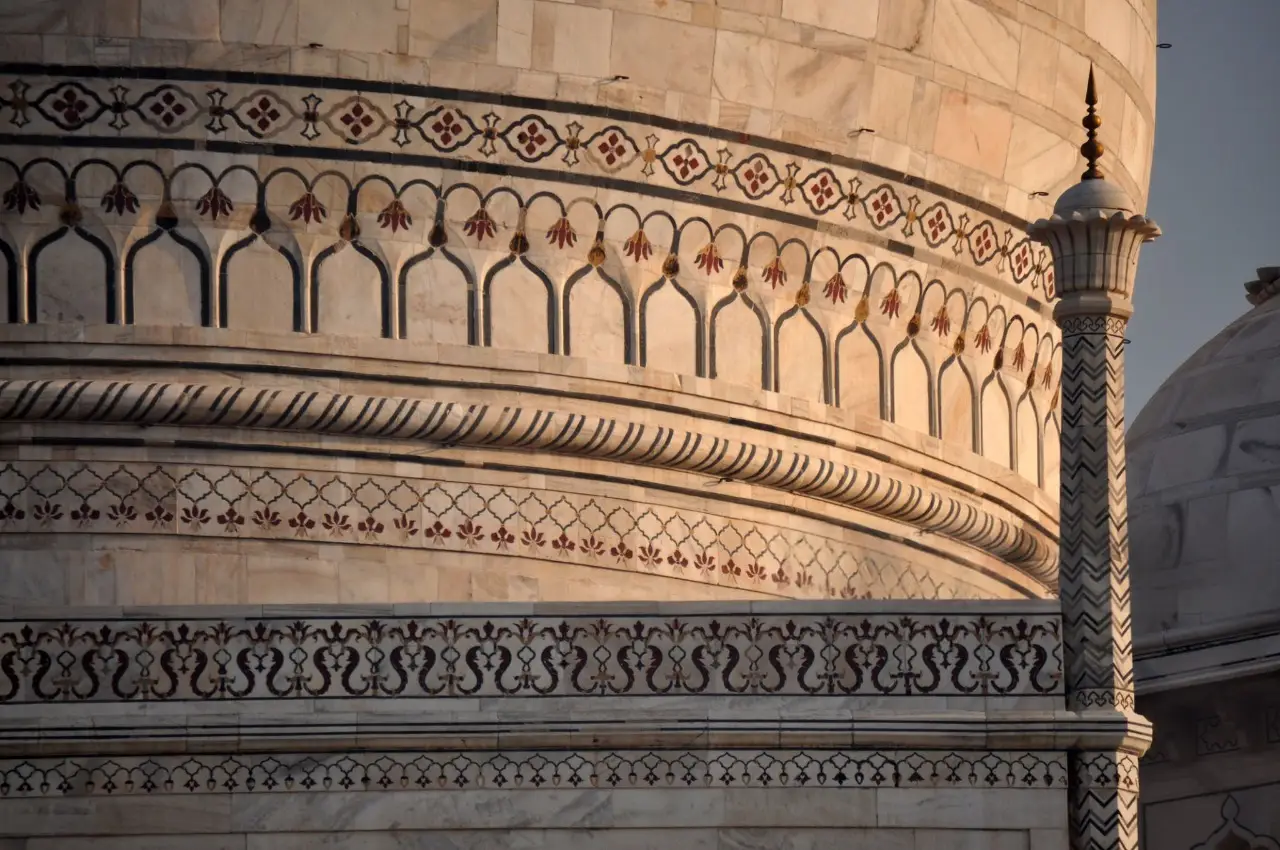
The Taj Mahal isn’t just a monument; it’s a love poem etched in stone. While its majestic dome and perfect symmetry capture the eye, it’s the mesmerizing marble inlay work covering its surfaces that truly whispers tales of unparalleled craftsmanship. This intricate artistry, known as Pietra Dura (meaning “hard stone” in Italian), transforms cold marble into a vibrant tapestry of flowers, vines, and geometric patterns. Let’s delve into the magic of this defining feature.
What Exactly is Marble Inlay Work (Pietra Dura)? Would you like to buy a marble inlay products Click Link
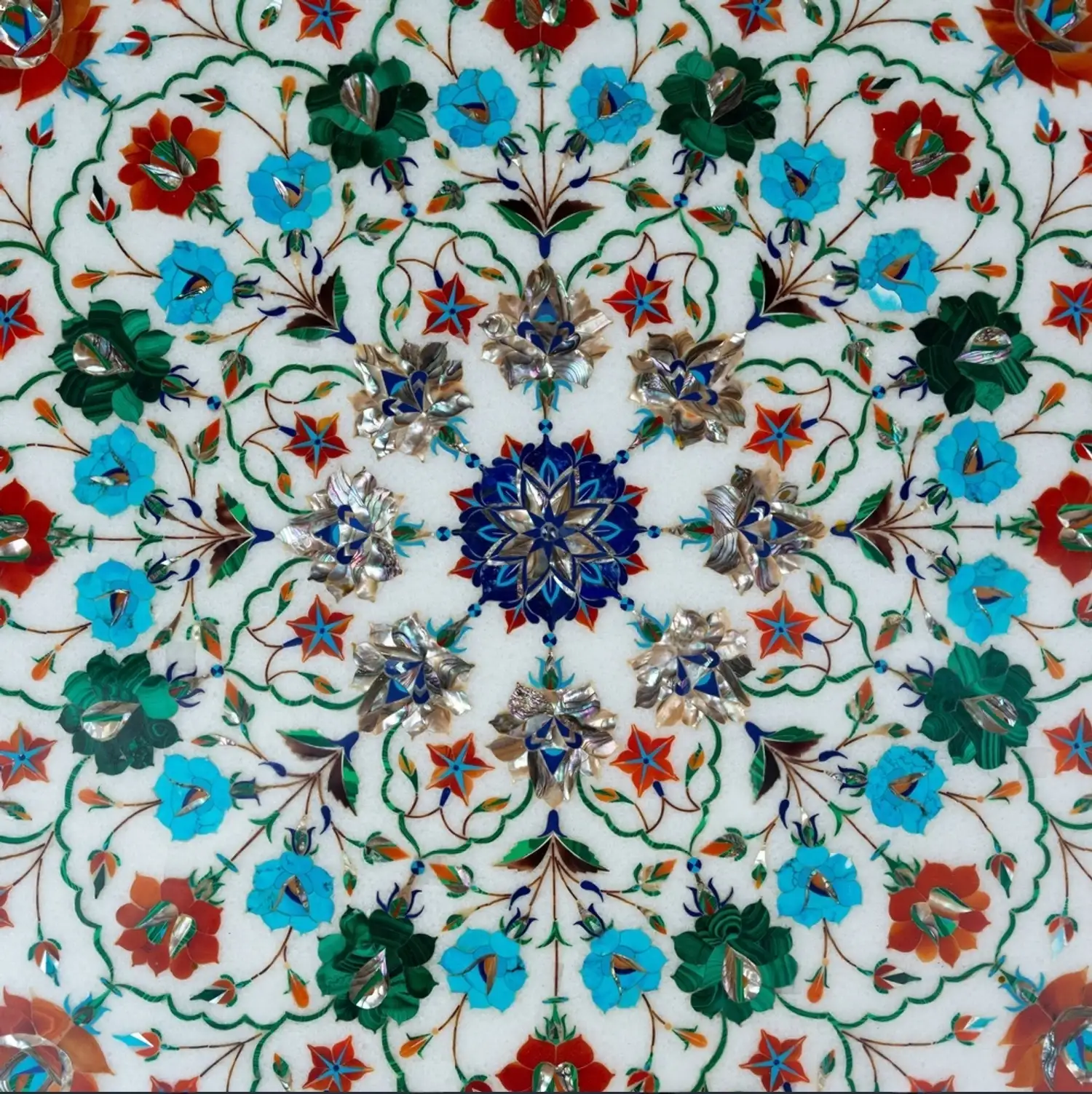
Marble inlay work, specifically the Pietra Dura technique used in the Taj Mahal, is a meticulous decorative art form. It involves:
-
Carving: Highly skilled artisans carve delicate designs and patterns into the pristine white Makrana marble base.
-
Filling: Precisely shaped pieces of semi-precious stones and colored stones are carefully cut and polished.
-
Inlaying: These perfectly fitted stone pieces (the “inlay”) are then embedded into the carved recesses of the marble base.
-
Finishing: The surface is polished to an ultra-smooth finish, making the inlay flush and seamless with the base marble.
The result? A breathtaking, smooth, and colorful design that appears painted on but is actually an integral part of the stone itself.
A Legacy Carved in Stone: The History Behind the Taj’s Inlay
-
Mughal Patronage: Emperor Shah Jahan commissioned the Taj Mahal (1632-1653) as a mausoleum for his beloved wife Mumtaz Mahal. He sought perfection and employed the finest artisans.
-
Global Inspiration: While intricate stonework existed in India, the Pietra Dura technique was highly refined in Florence, Italy. Mughal emperors, patrons of art, brought Italian and Persian master craftsmen to India and fused these styles with indigenous Indian designs.
-
Symbolism: The intricate floral patterns (like lilies, poppies, irises) weren’t just decoration; they symbolized paradise, eternity, and the beauty of nature, reflecting the Taj’s purpose as an eternal resting place. Geometric patterns showcased Islamic artistic principles.
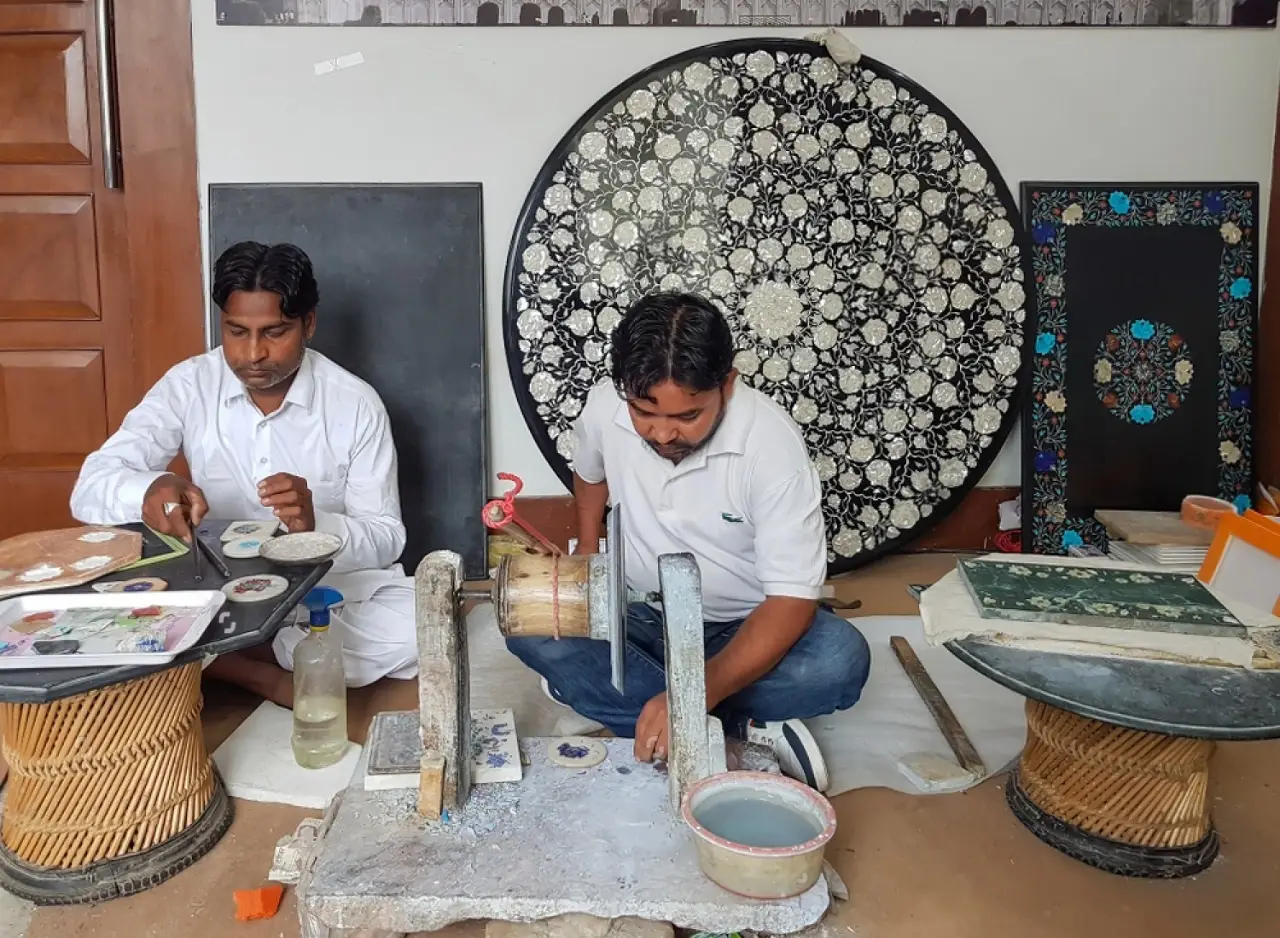
The Meticulous Process: How Taj Mahal’s Inlay is Created (Then & Now)
The process remains incredibly labor-intensive, demanding exceptional skill and patience:
-
Design Transfer: The intricate pattern is drawn on paper and then traced onto the marble slab.
-
Carving the Recess (Grooves): Using small chisels and hammers, craftsmen painstakingly carve out the design into the marble to a precise depth (a few millimeters).
-
Stone Selection & Cutting: Semi-precious stones are chosen for their vibrant color. Each tiny piece needed for the design is hand-cut and hand-polished to fit exactly into its specific carved recess. Imagine cutting thousands of microscopic stone jigsaw pieces!
-
Inlaying: The shaped stone pieces are set into the carved recesses using a natural adhesive (traditionally a lime-based paste or lac).
-
Polishing: The entire surface is polished with increasingly fine abrasives (traditionally stone, now often diamond powder) until the inlaid stones are perfectly flush with the marble base, creating a smooth, gleaming surface.
Key Materials Used in the Taj Mahal’s Inlay Work:
-
Base Stone: Glowing white Makrana Marble (from Rajasthan, India).
-
Inlay Stones (Semi-Precious & Others):
-
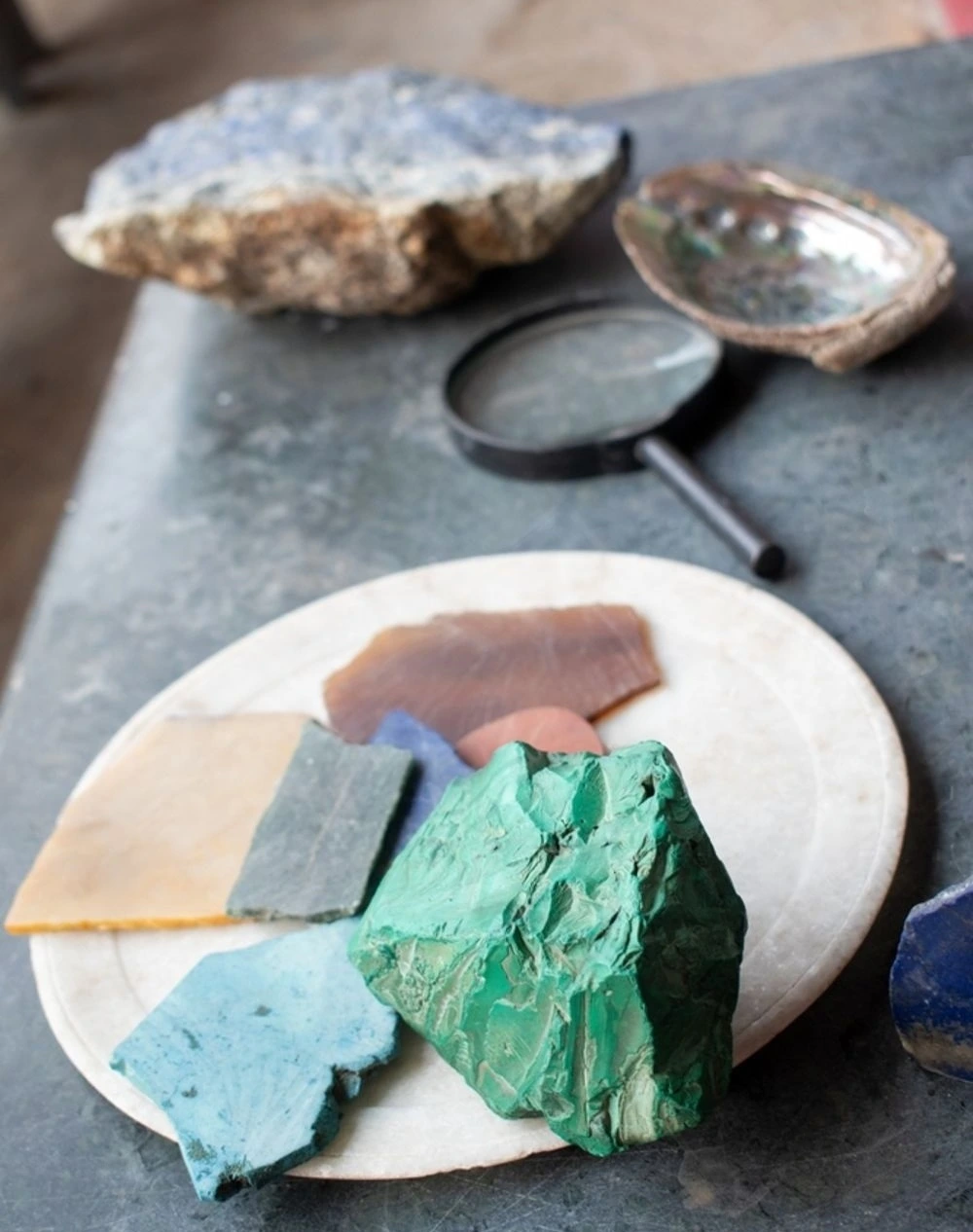
Lapis Lazuli: Deep, celestial blue (Afghanistan)
-
Carnelian: Warm, translucent red-orange (India, Arabia)
-
Jasper: Reds, browns, yellows (India)
-
Malachite: Vibrant green with banding (Africa)
-
Turquoise: Sky blue to greenish-blue (Persia/Tibet)
-
Cornelian: Reddish-brown
-
Onyx: Black and white bands
-
Amethyst: Purple
-
Mother of Pearl: Iridescent sheen (from seashells)
-
Jade: Green
- These are all semi-precious stone Inlaid Example:
-
The Unsung Heroes: The Artisans of Pietra Dura
The creation of the Taj Mahal’s inlay involved thousands of master craftsmen (Parchinkars). Historical accounts suggest Shah Jahan brought in specialists from across his empire and beyond (Italy, Persia). Their descendants, primarily based in Agra and nearby areas (like Fatehpur Sikri), continue this tradition centuries later, preserving this intangible cultural heritage.
Preserving the Stone Tapestry: Challenges
-
Pollution: Acid rain and environmental pollution in Agra can damage the marble and dull the stones.
-
Natural Wear: Centuries of exposure take a toll.
-
Tourism: While essential, physical contact can cause damage over time.
-
Conservation Efforts: Ongoing, meticulous cleaning and restoration projects by the Archaeological Survey of India (ASI) aim to preserve this irreplaceable artistry using traditional methods where possible. Replacing damaged inlay requires the same high level of skill used in the original construction.
Witnessing the Magic: Where to See it on the Taj Mahal
The pietra dura covers vast areas:
-
Exterior Walls: Framing arches (spandrels), borders around calligraphy panels.
-
Interior Walls: Extensive floral and geometric panels covering the lower walls of the main chamber and corridors.
-
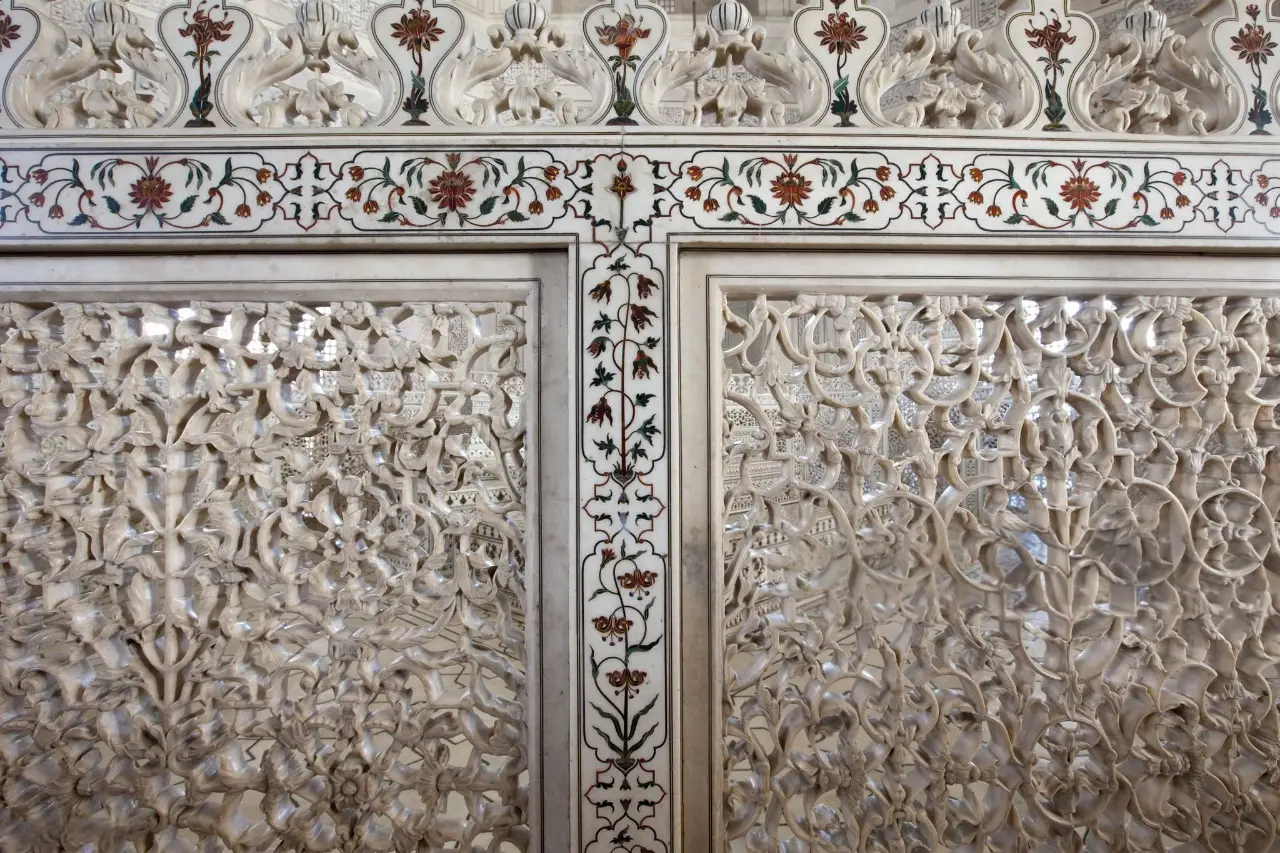
The Cenotaphs: Exquisitely inlaid marble screens (jalis) surround the cenotaphs of Mumtaz Mahal and Shah Jahan.
-
The Jali Screens: Intricately carved and often featuring inlaid borders.
The Enduring Legacy
The marble inlay work of the Taj Mahal is far more than decoration; it’s the soul of the monument. It represents the zenith of Mughal artistic achievement, a fusion of global influences, and an enduring testament to human patience, skill, and devotion. The vibrant semi-precious stones embedded in the luminous white marble create a visual symphony that continues to captivate millions, just as Shah Jahan intended – a symbol of eternal, flawless beauty.
Ready to see this wonder? Visit the Taj Mahal and allow yourself ample time to marvel at the intricate pietra dura details up close – it’s where the true magic of this “teardrop on the cheek of time” resides.